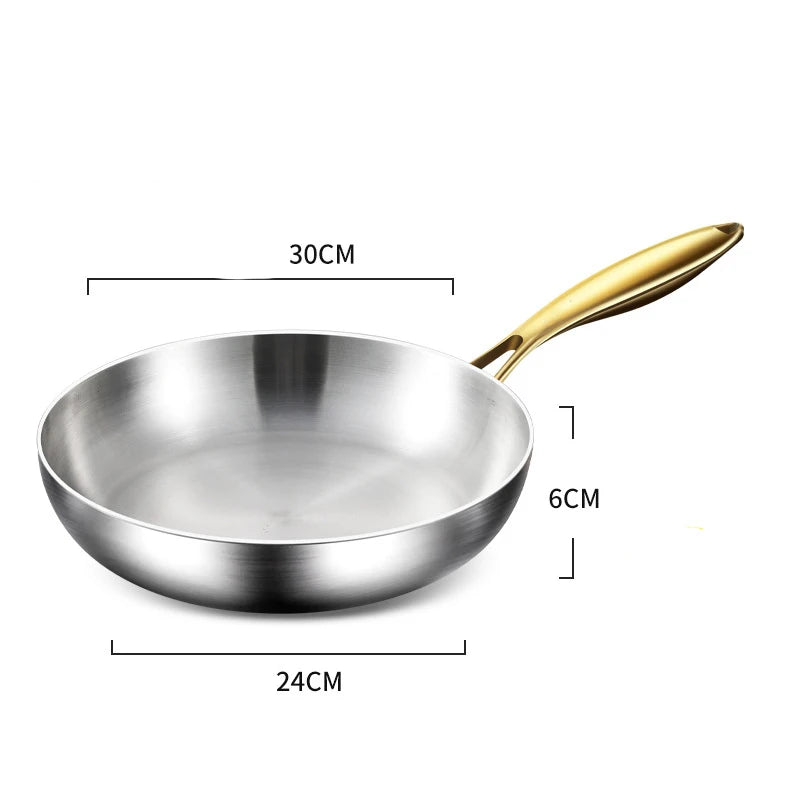
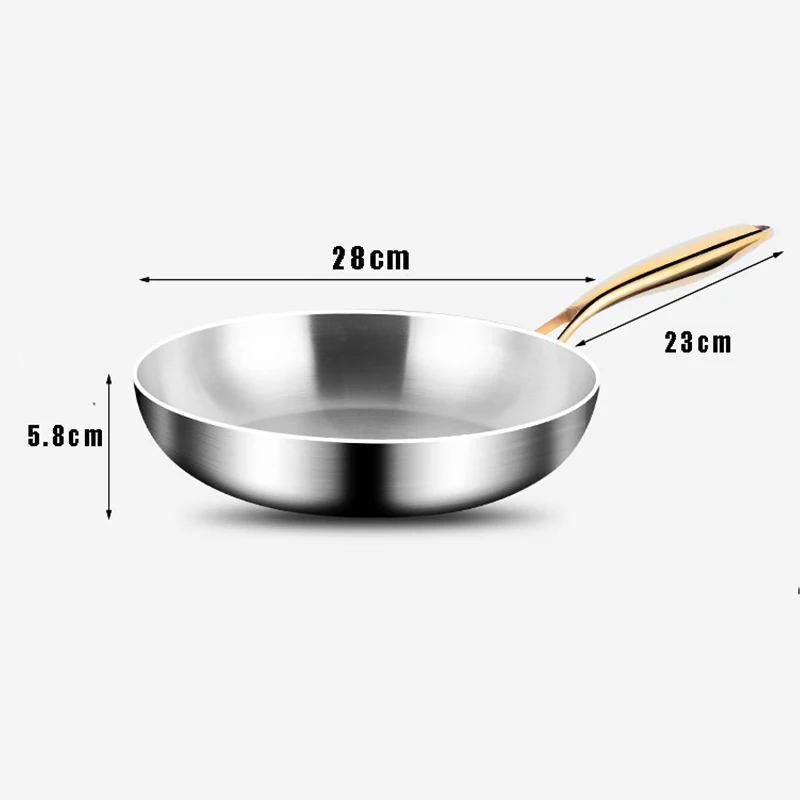
28cm Stainless Steel Nonstick Frying Pan Wok
28cm Stainless Steel Nonstick Frying Pan Wok
SPECIFICATIONS
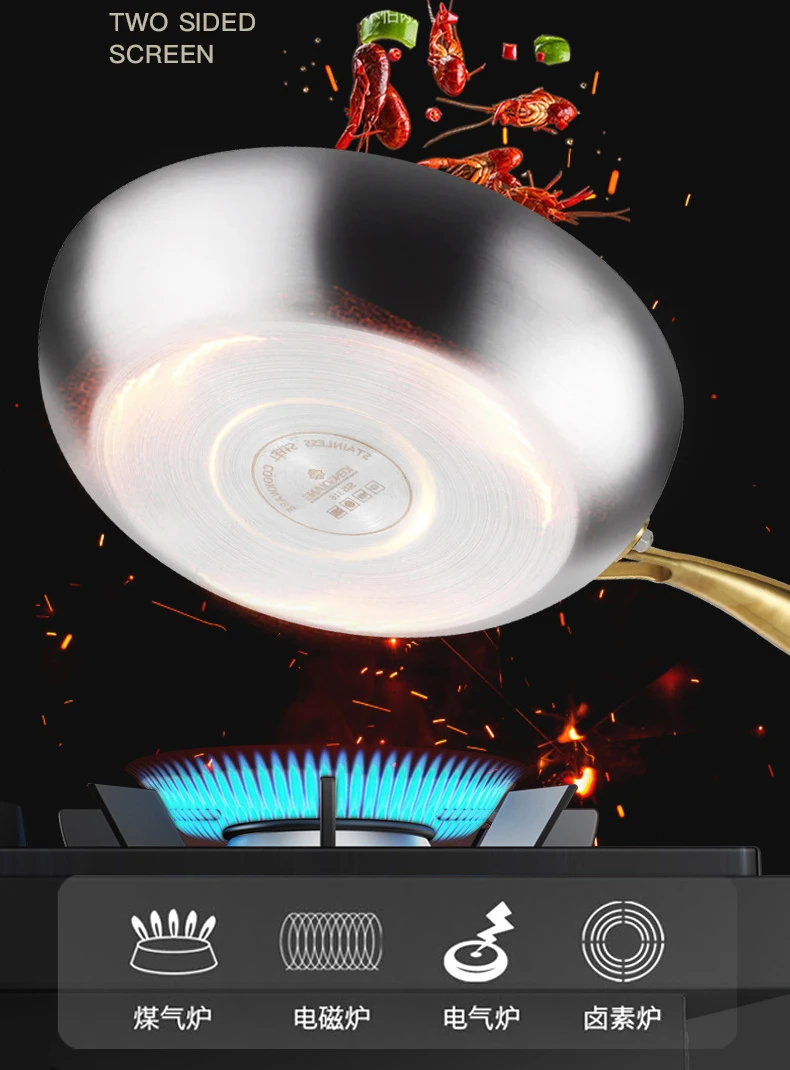
Applicable Stove: General Use for Gas and Induction Cooker
Brand Name: NONE
Certification: CE / EU,CIQ
Choice: yes
Diameter: 28cm
Feature: Eco-Friendly,Stocked
High-concerned chemical: None
Material: Stainless Steel
Metal Type: Stainless Steel
Origin: Mainland China
Pans Type: Chef's Pans
Pot Cover: no
Pot Cover Type: Without Pot Cover
Type: Pans
Wok type: Non-coating
How Stainless Steel Pans Achieve Non-Stick Performance (Not Absolutely Non-Stick)
Stainless steel pans provide conditional physical non-stick performance (without any chemical coatings), not permanent or complete non-stick properties. They have clear usage boundaries. The core mechanism and limitations are as follows:
I. Core Non-Stick Mechanisms
Oil Film Isolation
Stainless steel surfaces have microscopic uneven textures invisible to the naked eye. When the pan is fully preheated to the "water bead test" standard (a drop of water rolls quickly into a bead and evaporates completely within 3-5 seconds), poured cooking oil spreads evenly under surface tension, filling all microscopic gaps. This forms a continuous isolation oil film that prevents direct contact and chemical bonding between food proteins and the metal surface.
Steam Cushion Suspension
When the pan temperature is sufficiently high, moisture on the food surface vaporizes instantly upon contact with the hot pan, creating an extremely thin steam cushion beneath the oil film. This further reduces the actual contact area between food and the pan surface, achieving a dual non-stick effect.
II. Why It Is Not Completely Non-Stick?
Non-stick effect entirely depends on usage methods
If the pan temperature is insufficient, oil quantity is too low, or food is added to a cold pan with cold oil, the oil film cannot form or will rupture, inevitably causing food to stick.
Weak resistance to high-protein foods
Protein-rich ingredients such as eggs, fish, and chicken breast are more likely to stick than vegetables and fatty meats even with correct operation, especially delicate parts like fish skin and egg liquid.
Pan surface condition significantly impacts performance
When the pan surface has scratches, burnt residue, or oxidized yellowing oil stains, the microscopic surface is damaged. The oil film cannot adhere evenly, and non-stick performance will decline significantly.
Prolonged high temperatures destroy the oil film
Long-term dry heating or oil temperatures exceeding the smoke point will carbonize and decompose the oil film, losing its isolation effect and causing severe sticking.
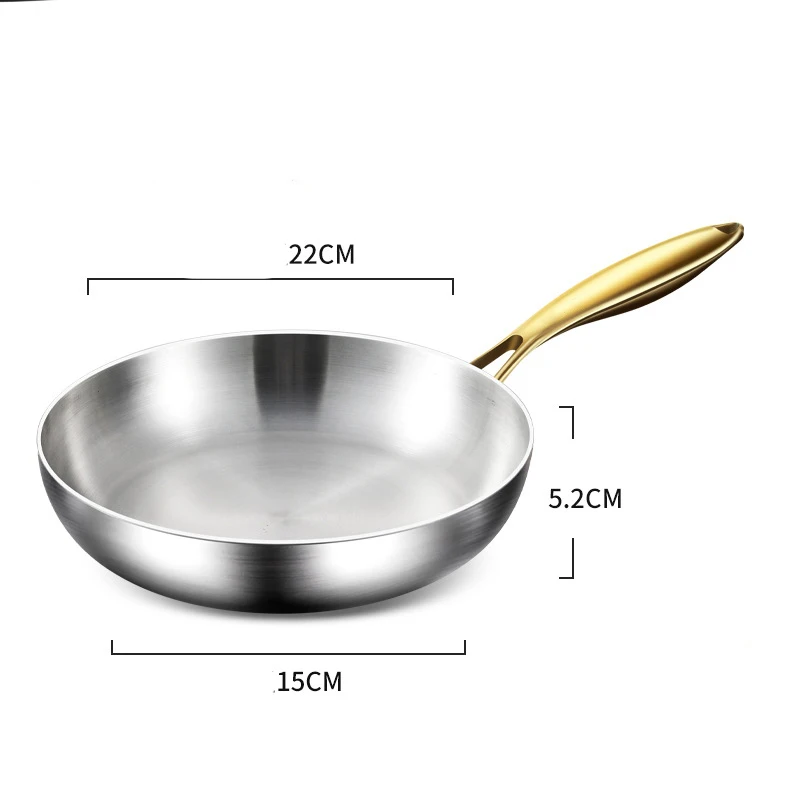
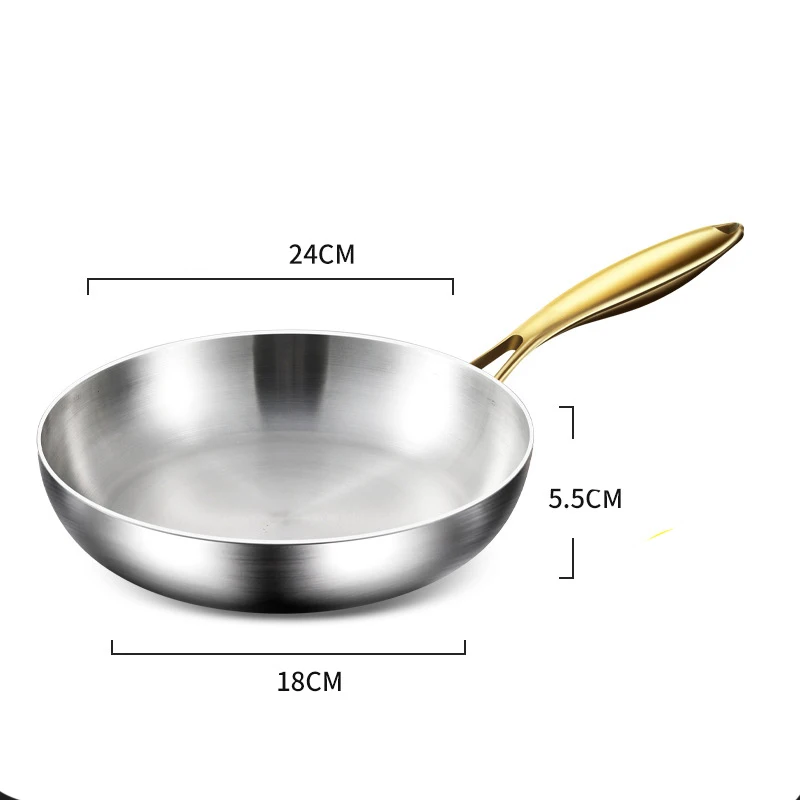
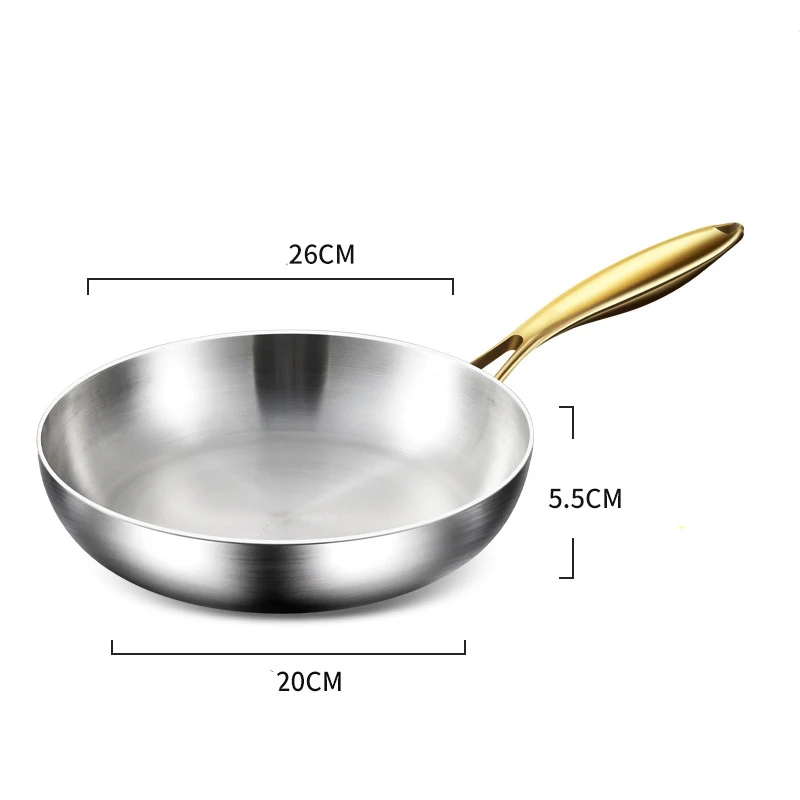
Specifications: 22cm/24cm/26cm/28cm/30cm
Packing list: 1* Frying pan
Note:
1. The size is measured manually, and there will be an error of 0.5cm-2cm. Please refer to the actual product.
2. Due to different monitors, there will be a slight color difference. Please refer to the actual product.
3. This pan is not completely non-stick. It simply improves the non-stick functionality through physical properties. This depends on your cooking skills and type of food. This is a characteristic of stainless steel pots. If you are very worried about this, please place an order with caution. Thanks.
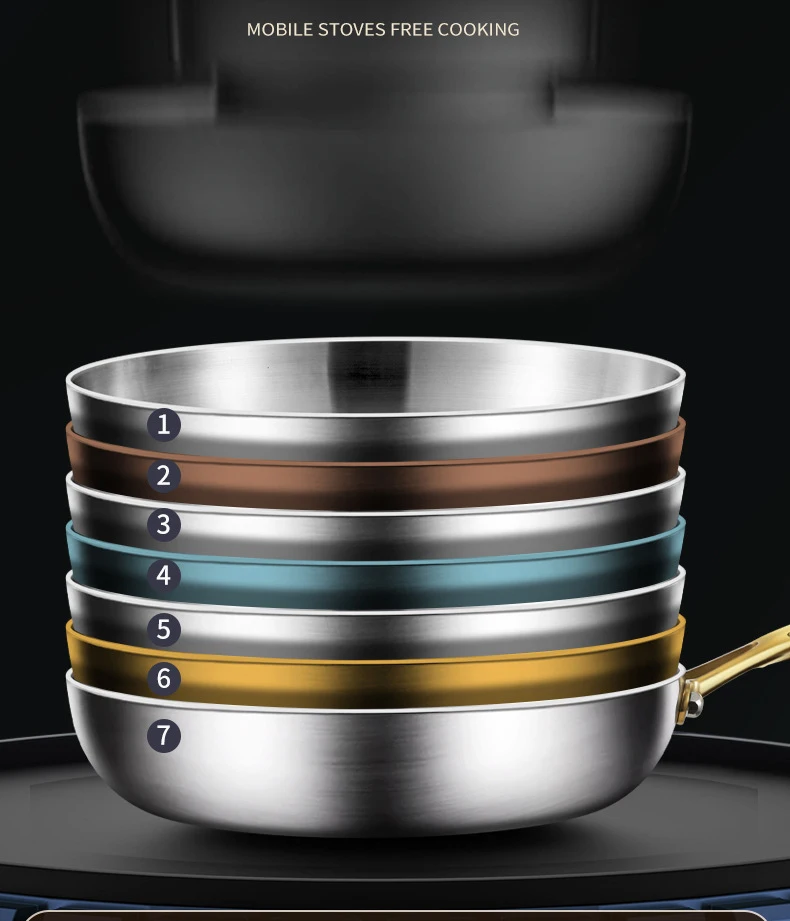
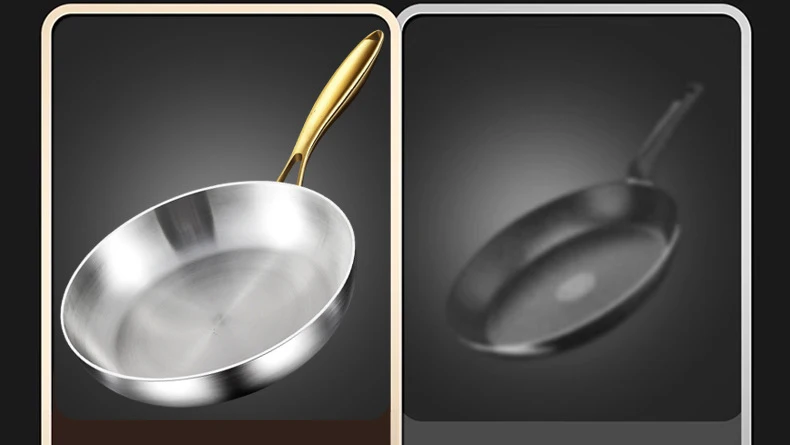
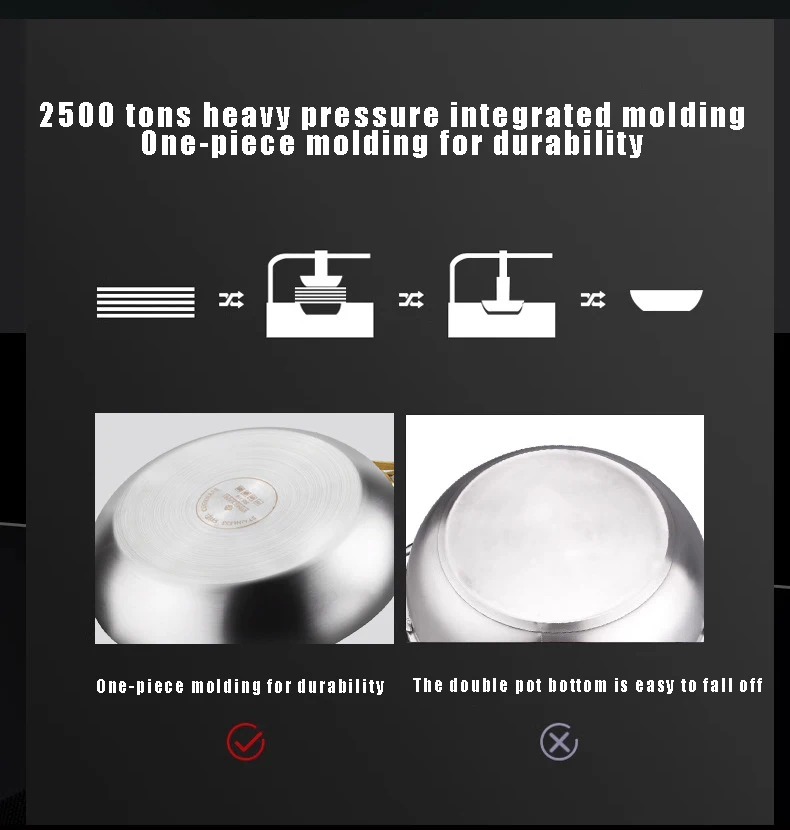
• 316 Stainless Steel Construction :Crafted from high-quality 316 stainless steel, this frying pan offers superior durability and resistance to rust and corrosion, ensuring long-lasting performance.
• 2MM Thickness :With a thickness of 2MM, this frying pan provides excellent heat distribution for even cooking, enhancing the taste and texture of your dishes.
• Eco-Friendly Material :This frying pan is made from eco-friendly materials, making it a safe and environmentally friendly choice for your cooking needs.
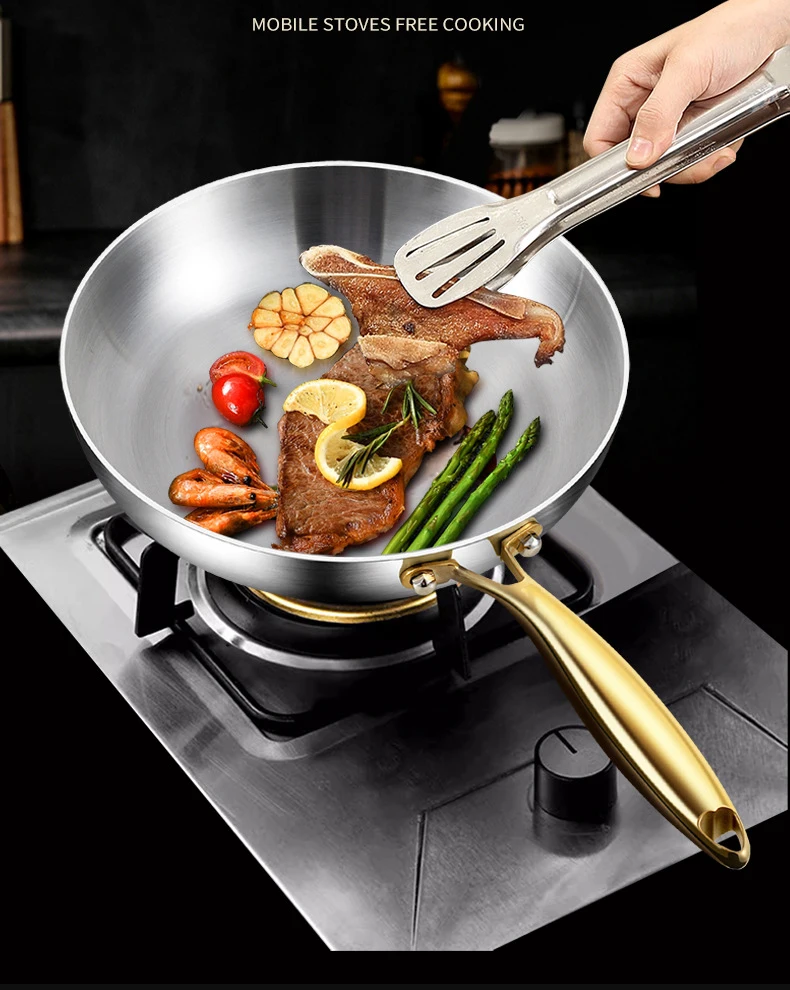
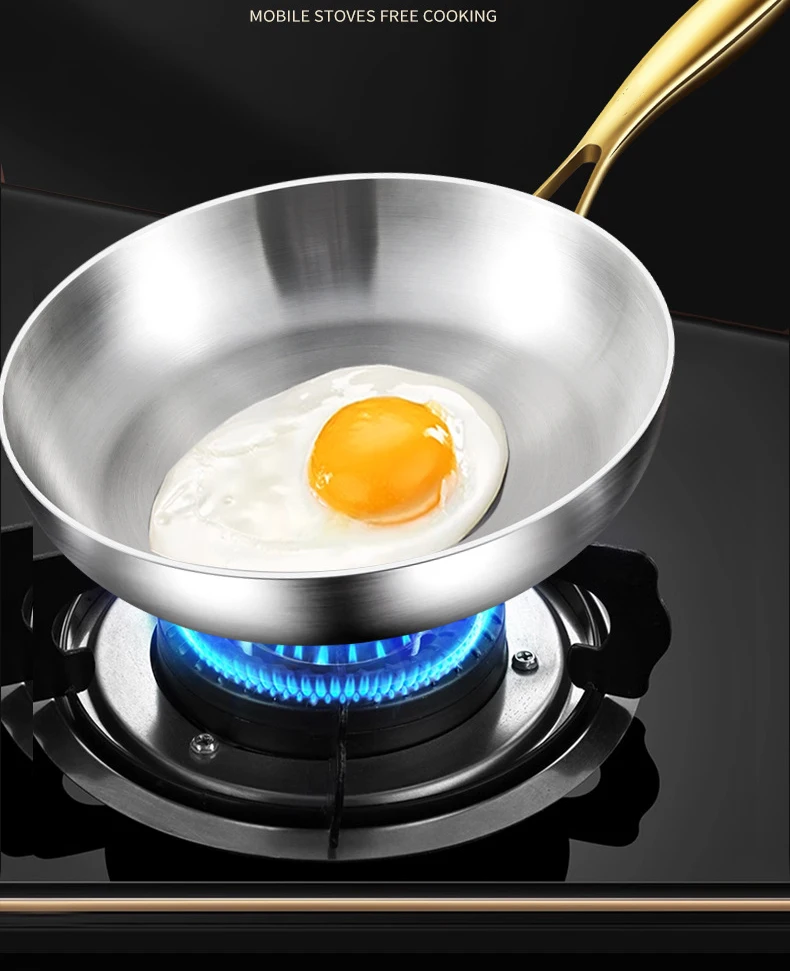
• Versatile Use :Designed for general use, this frying pan can be used with both gas and induction cookers, offering versatility and convenience in the kitchen.
Cooking tips:
There are some dishes that are easy to stick to the pan, such as stir-fried shredded pork, fried eggs, etc. We
will teach you some tips.
Turn on the heat (medium heat) and heat the pan (three to five minutes). Heat the oil (turn to low heat) and
heat the oil for about 10 seconds before serving.
Three factors are important:
1. Only when the pot is fully preheated can it exert its perfect physical non-stick properties: many people miss
the very important step of "preheating the pot over medium-low heat for three to five minutes" during use. They
pour oil directly and only Preheating the oil without preheating the pan may cause a little sticking to the pan.
2. Failure to turn down the heat in time when frying: Be sure to turn down the heat when you start frying. When
the fried vegetables no longer stick to the bottom, you can flip them back and forth, and then turn up the heat
slightly.
3. Don't rush to turn the food over. You can use a shovel to pile it lightly and move it back and forth before
turning it over. Food will shrink only when it is cooked, so it no longer sticks to the pan and is much easier to turn.
Of course, this is also required for frying vegetables that are easy to stick. For other vegetables, just use cold pan
and cold oil for frying. Starches are also used in cold pans and cold oils. It is difficult to master a new pot. If you
use it a few times, you will get better at it over time.
Attention:
Physically non stick, it is necessary to control the temperature of the cookware. For ingredients that are prone to sticking to the pot, such as eggs, meat, fish, tofu, shredded potatoes, etc., be sure to preheat the cookware for 1-3 minutes before pouring oil or preheating it together with oil. Wait for the oil to form oil streaks before adding the ingredients.
Multi-functional cooking -
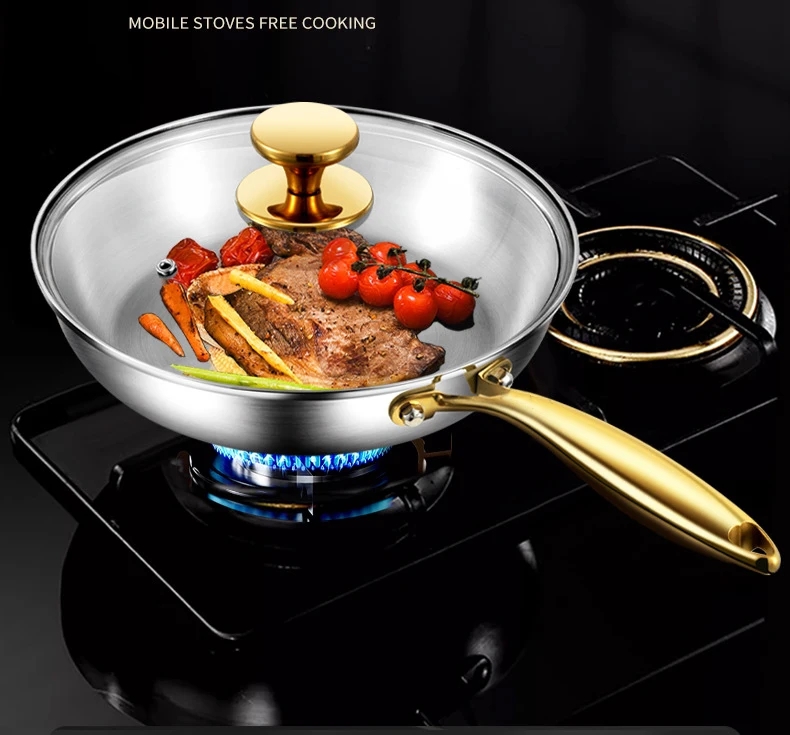
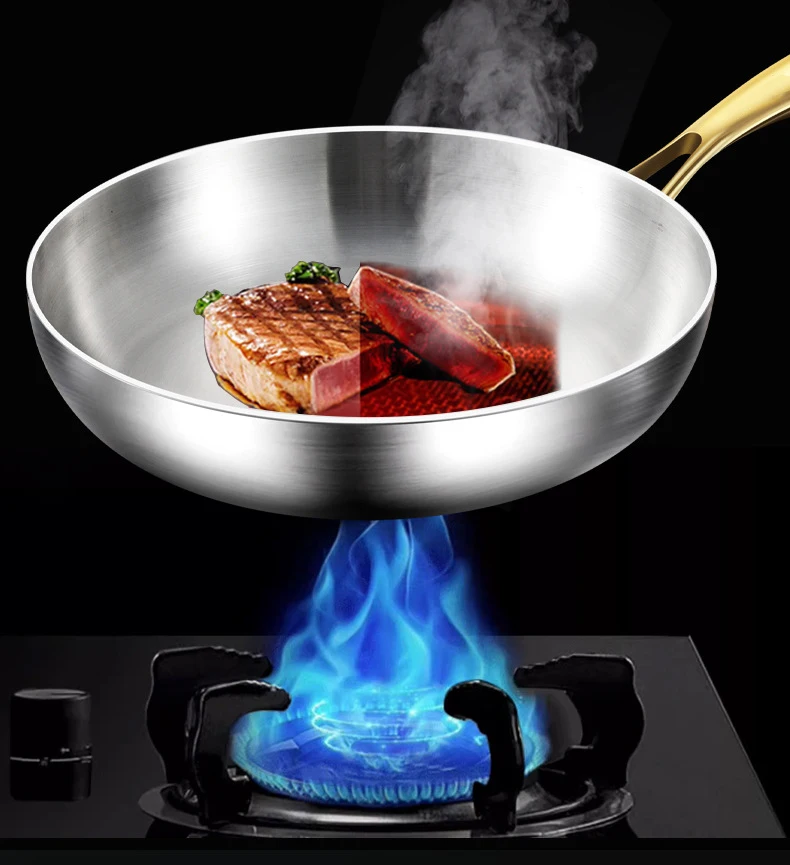
it can cook Western dishes such as omelets and steaks, as well as Chinese stir-fries and stews.
Less oily smoke -
Uniform heat conduction can better control the oil temperature and reduce the generation of oily smoke from the source.
A daily must-
have for the family - one pot meets a variety of cooking needs and is a practical tool frequently used in the kitchen.
Causes of Yellowing and Slight Magnetism in 316 Stainless Steel Pans
I. Root Causes of Yellowing in 316 Stainless Steel Pans
The vast majority of yellowing on 316 stainless steel pans is a normal physical and chemical phenomenon, not a sign of inferior material or rust. It mainly falls into the following 5 categories:
Interference-colored passivation film formed by high-temperature oxidation (most common normal phenomenon)
The core anti-rust mechanism of 316 stainless steel is the formation of a dense chromium trioxide (Cr₂O₃) passivation film on the surface. When the pan is heated above 200°C, the passivation film gradually thickens. Oxide films of different thicknesses produce different interference effects on light, resulting in pale yellow, golden yellow, or even iridescent colors. This film is the key to protecting the pan from further corrosion and is completely non-toxic and harmless, with no impact on food safety.
High-temperature carbonization of oil and food residues
Splashed cooking oil and food soup accumulate over time on the pan rim, outer bottom, handle joints, and other areas. They undergo carbonization reactions at high temperatures, forming hard-to-remove yellow burnt stains. This type of yellowing is the result of organic matter carbonization, not deterioration of the stainless steel itself.
Hard water mineral deposits
Calcium and magnesium ions in hard water form calcium carbonate and magnesium carbonate scale during boiling. These white scales, when mixed with oil stains and oxide films, appear as uneven yellow spots.
Improper cleaning and usage habits
Excessive scrubbing with hard tools such as steel wool or emery cloth will scratch the surface passivation film, leading to accelerated local oxidation and easier yellowing;
Long-term use of strong alkaline or strong oxidizing cleaners (such as 84 disinfectant, bleach) will destroy the stability of the passivation film;
Prolonged dry heating of an empty pan will sharply increase the pan temperature, accelerating the thickening and discoloration of the oxide film.
Localized corrosion (abnormal situation)
If punctate or pit-shaped yellow rust spots appear on the pan surface and reappear after wiping, it may be local pitting corrosion caused by long-term storage of high-salt or high-acid foods (such as pickles, vinegar, tomato soup). Although 316 stainless steel has better corrosion resistance than 304, it is not absolutely corrosion-resistant.
II. Scientific Explanation of Slight Magnetism in 316 Stainless Steel Pans
"316 stainless steel is completely non-magnetic" is the most common misconception among the public. Qualified 316 stainless steel pans with weak magnetism are a completely normal physical phenomenon and have nothing to do with the authenticity of the material:
Metallurgical nature of the material
316 belongs to austenitic stainless steel, and the austenite crystal structure itself is non-magnetic. However, austenite is a high-temperature stable phase and is in a metastable state at room temperature. It will undergo structural transformation when stimulated by external energy.
Cold working deformation-induced martensitic transformation (core reason)
Stainless steel pans must undergo cold working processes such as stretching, stamping, bending, crimping, and polishing during manufacturing. These mechanical deformations will transform part of the metastable austenite structure into martensite structure, which is strongly magnetic. Therefore, the pan body will have weak magnetism.
Characteristics of magnetic distribution
The strength of magnetism is directly related to the amount of cold working deformation:
Parts with large deformation (pan rim crimp, bottom edge, handle welding joints, pan body corners) have relatively obvious magnetism;
Parts with small deformation (central flat area of the pan) have extremely weak magnetism or even undetectable;
The overall magnetism is very weak. Ordinary magnets can only feel a slight attraction and cannot lift the pan body.
This can be cleaned. Don't worry, this is washable. Avoid using hard objects such as steel wool as they can scratch the stainless steel surface, making it more susceptible to staining and rust in the future.
Depending on the severity of the yellowing, see the following methods (from easiest to more difficult):
Method 1: Clean gently every day. (Suitable for slightly yellowish color)
baking soda paste
Instructions: Sprinkle a generous amount of baking soda in the bottom of the pan, then add a few drops of water to form a thick paste, making sure to completely cover the yellowed areas. Let sit for 15-30 minutes, then wipe repeatedly with a soft sponge or cloth. Rinse thoroughly with water.
Soak/boil with white vinegar
Instructions for use: Pour an appropriate amount of white vinegar and water (1:1 ratio) into the pot, making sure to completely cover the yellow area. Bring to a boil, then remove from heat and allow to cool until lukewarm. Cleaning with a sponge will make yellowing areas easier to remove.Method 2: Powerful Deep Cleansing (for moderate to severe yellowing)
This is the most efficient and recommended way to use redox reactions.
Main ingredients: white vinegar (or citric acid) + baking soda
Step 1: Weaken the Acid
Put a cup of water and white vinegar. Pour some water (or a few tablespoons of citric acid powder) into the pot and cook for 5-10 minutes. Remove from the heat and pour in most of the water, leaving a little at the bottom.
Step 2: Neutralize and exfoliate with alkali.
Sprinkle some baking soda into the warm pot. As the baking soda reacts with the remaining acid, you should see bubbles form, which will help loosen the burnt stain. Wipe the pan with a soft cloth or sponge while it's still hot. For stubborn stains, let the baking soda sit for 15 minutes before scrubbing.
Step Three: Clean and Inspect
Rinse thoroughly with clean water. If there is still residue, repeat the above process.
this important notebook
Avoid using hard objects: Do not scratch with wool, metal spatulas, or other hard objects.
Clean Now: It's easiest to clean your pan after each use while it's still hot because stains haven't gone away.
Wipe or tumble dry after each cleaning to prevent water stains from forming.
Step-by-step: It is recommended to start with the most aggressive approach. (baking soda), and if that doesn't work, gradually switch to a more concentrated method.
Product features
Product features
Materials and care
Materials and care
Merchandising tips
Merchandising tips